

Llarry wroteProbably significantly less expensive than trying to build them here with all the regulations and union shenanigans.In another indication of the lamentable state of ship construction in the USA, the Navy has now been encouraged to consider foreign shipyards in Japan or Korea for warship construction. Adoption of a foreign design of a new frigate class is even under consideration as the Constellation (FFG 62) class has been cancelled after the procurement of just two ships.
2.2MVIEWS
666REPLIES
1.1KAPPRECIATES
42ACTIVE PEOPLE
05-14-2026LAST POST
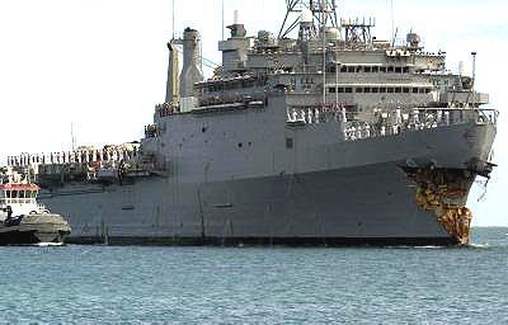
The Front Fell Off
Interviewer: Senator Collins, thanks for coming in.
Senator Collins: It’s a great pleasure, thank you.
Interviewer: This ship that was involved in the incident off Western Australia this
week...
Senator Collins: The one the front fell off?
Interviewer: Yeah.
Senator Collins: Yeah, that’s not very typical, I’d like to make that point.
Interviewer: Well, how was it un-typical?
Senator Collins: Well there are a lot of these ships going around the world all the
time, and very seldom does anything like this happen. I just don’t want people
thinking that tankers aren’t safe.
Interviewer: Was this tanker safe?
Senator Collins: Well, I was thinking more about the other ones.
Interviewer: The ones that are safe?
Senator Collins: Yeah, the ones the front doesn’t fall off.
Interviewer: Well, if this wasn’t safe, why did it have 80,000 tons of oil on it?
Senator Collins: I’m not saying it wasn’t safe, it’s just perhaps not quite as safe as
some of the other ones.
Interviewer: Why?
Senator Collins: Well, some of them are built so that the front doesn’t fall off at all.
Interviewer: Wasn’t this built so that the front wouldn’t fall off?
Senator Collins: Well, obviously not.
Interviewer: How do you know?
Senator Collins: Well, because the front fell off and 20,000 tons of crude oil spilled
into the sea caught fire. It’s a bit of a giveaway. I’d just like to make the point that
that is not normal.
Interviewer: Well what sort of engineering standards are these oil tankers built to?
Senator Collins: Oh, very rigorous maritime engineering standards.
Interviewer: What sort of thing?
Senator Collins: Well, the front’s not supposed to fall off for a start.
Interviewer: And what other things?
Senator Collins: Well, there are regulations governing the materials they can be
made of.
Interviewer: What materials?
Senator Collins: Well, cardboard’s out.
Interviewer: And?
Senator Collins: No cardboard derivatives.
Interviewer: Like paper?
Senator Collins: No paper. No string. No sellotape.
Interviewer: Rubber?
Senator Collins: No, rubber’s out. Umm, they’ve got to have a steering wheel.
There’s a minimum crew requirement.
Interviewer: What’s the minimum crew?
Senator Collins: Oh, one I suppose.
Interviewer: So the allegations that they’re just designed to carry as much oil as
possible no matter the consequences, I mean that’s ludicrous isn’t it?
Senator Collins: Absolutely ludicrous, these are very very strong vessels.
Interviewer: So what happened in this case?
Senator Collins: Well, the front fell off in this case by all means, but it’s very unusual.
Interviewer: But Senator Collins, why did the front fall off?
Senator Collins: Well a wave hit it.
Interviewer: A wave hit it?
Senator Collins: A wave hit the ship.
Interviewer: Is that unusual?
Senator Collins: Oh yeah. At sea? Chance in a million!
Interviewer: So what do you do to protect the environment in cases like this?
Senator Collins: Well the ship was towed outside the environment.
Interviewer: Into another environment?
Senator Collins: No, no, it’s been towed beyond the environment. It’s not in the
environment.
Interviewer: No but from one environment to another environment.
Senator Collins: No it’s beyond the environment. It’s not in an environment. It’s
been towed beyond the environment.
Interviewer: But it must be somewhere… Well what’s out there?
Senator Collins: Nothing’s out there!
Interviewer: Well there must be something out there.
Senator Collins: There is nothing out there - all there is is sea, and birds, and fish.
Interviewer: And?
Senator Collins: And 20,000 tons of crude oil.
Interviewer: And what else?
Senator Collins: And fire.
Interviewer: And anything else?
Senator Collins: And the part of the ship that the front fell off. But there’s nothing
else out there.
Interviewer: Senator Collins, thanks for joining us.
Senator Collins: It’s a complete void.
Interviewer: Yeah, we’re out of time.
Senator Collins: The environment’s perfectly safe. We’re out of time?
Interviewer: Yeah.
Senator Collins: Can you book me a cab?
Interviewer: But didn’t you come in a commonwealth car?
Senator Collins: Yes I did but...
Interviewer: What happened?
Senator Collins: Well, the front fell off.
The Chinese have resurrected the idea with the construction of barges that are towed into position and then jacked up. Multiple barges can be connected by bridges to allow large ships to unload offshore. The Chinese call them "shui qiao" (Literally: water bridge).
Very clever.
In any event, this post attempts to summarize what the increase would mean in terms of U.S. Navy warships by ship type.
SSBN (Ballistic missile submarines) -- The first of a new class of SSBN is scheduled to join the fleet in 2029, with subsequent boats following at the rate of one per year until a total of 12 are active. These Columbia-class submarines are a vital component of U.S. strategic forces and the program is unlikely to be cut.
SSGN (Missile submarines) -- The current four ex-SSBN SSGNs are slated to be retired beginning in 2027. Four new purpose-built SSGNs are proposed to be built beginning in the 2040s.
SSN (Attack submarines) -- Virginia-class SSNs are planned to join the fleet at a rate of 1-2 per year. As previously discussed in this thread, U.S. shipyards have faced difficulty in keeping up with orders for submarines. While the current force is about 50 boats, the goal is 60-plus.
CVN (Aircraft carriers) -- Ford-class carriers continue under construction, replacing older Nimitz-class carriers. New ships will join the fleet every 3-4 years. The projected force level of CVNs will drop from 11 to 10 and perhaps even 9 ships; the goal is 10 active carriers.
BBGN (Battleships) -- The first nuclear-powered battleship is projected to be funded in 2028, with a total of 15 ships to be built over the next 30 years.
CG (Missile cruisers) -- The AEGIS missile cruisers are going fast, with retiring ships replaced in the air and missile defense role by improved missile destroyers.
DDG (Missile destroyers) -- The Arleigh Burke class DDGs continue to be purchased at the rate of two per year. Early ships will start retiring soon, with the latest versions having improvements across the board. The total force of destroyers is projected to be 70-80 ships.
FFG (Missile frigates) -- The smaller and less capable frigates will free up DDGs for more challenging missions. The original plan was for only a dozen frigates -- the budget now projects a total of over 60.
Llarry wroteA couple of notes that I failed to address in my post:CVN (Aircraft carriers) -- Ford-class carriers continue under construction, replacing older Nimitz-class carriers. New ships will join the fleet every 3-4 years. The projected force level of CVNs will drop from 11 to 10 and perhaps even 9 ships; the goal is 10 active carriers.
BBGN (Battleships) -- The first nuclear-powered battleship is projected to be funded in 2028, with a total of 15 ships to be built over the next 30 years.
-- The Navy intends to modify the Ford-class CVNs, with details that are not clear but include an effort to reduce cost
-- The term "battleship" traditionally refers to a heavily armed warship with extensive armor protection. Apparently the planned BBGN will not have armor protection. A more appropriate designation might be "battle cruiser" which is a warship with battleship-level armament but less armor protection. The chance of anyone in the Navy listening to me on this point is zero.

