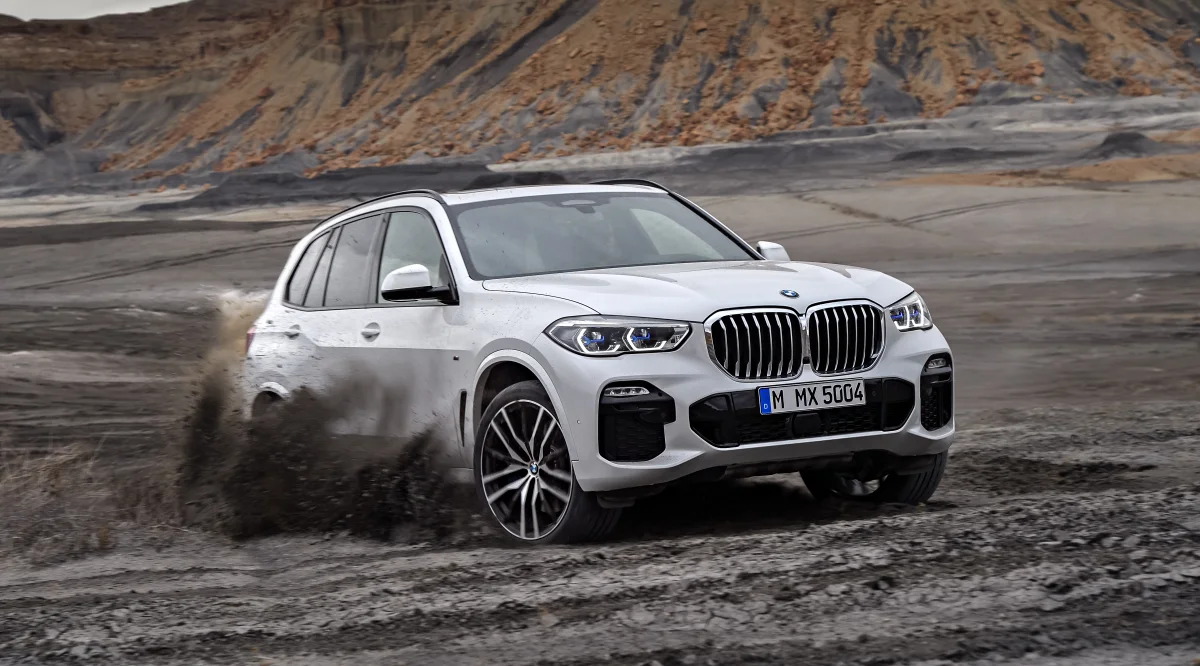
G05
BMW X5
4KVIEWS
8REPLIES
14APPRECIATES
7ACTIVE PEOPLE
05-11-2026LAST POST
05-08-2026
BMW M Ignite technology: Innovative new technology for all six-cylinder in-line engines from BMW M.

07.05.2026 Press Release

+++ Pre-chamber combustion patented by BMW celebrates its premiere. High-efficiency new development makes its series production debut in BMW M models and enables a significant reduction in fuel consumption under high loads. New ignition process is a prime example of the transfer of technology from racing cars to series-production models and helps to meet the requirements of the EU7 standard. Production of the BMW M3 and BMW M4 with BMW M Ignite technology begins in July 2026; the new engine technology will be available for the BMW M2 from August 2026. +++

Munich.
With BMW M Ignite technology, a new engine technology patented by BMW in 2024 is set to enter series production. This new kind of pre-chamber ignition system for petrol engines will debut in the six-cylinder in-line units for the BMW M2, BMW M3 and BMW M4 from mid-2026. One of its standout benefits is a significant reduction in fuel consumption under high loads – during track use, in particular. This new engine innovation has its roots in motor sport, making it another example of the transfer of technology from the race track to the road. And it also plays a major role in meeting the stringent requirements of the Euro 7 standard.

The centrepiece of BMW M Ignite technology is the pre-chamber positioned within the cylinder head. It is connected with the cylinder’s main combustion chamber by overflow openings. The pre-chamber has its own spark plug and ignition coil, meaning the engine has two ignition systems.

At low and medium revs, the conventional spark plug in the main combustion chamber fires before the spark plug in the pre-chamber. But when the engine is operating under higher revs and loads, the pre-chamber ignition takes over the lead role, with part of the fuel-air mixture channelled through the openings into the pre-chamber also ignited there. The flames generated as a result exit the pre-chamber at around the speed of sound.

These ignition jets then ignite the mixture in the main combustion chamber above the piston at multiple points at the same time. The result is a significantly higher combustion speed. Meanwhile, the possible cause of uncontrolled combustion – i.e. “knocking” – is also countered effectively. An additional effect of this technology is a drop in the temperature of the exhaust gas.

Other new technical features alongside the pre-chamber ignition include a higher compression ratio and turbochargers with variable turbine geometry.

BMW M Ignite technology boosts the efficiency of the six-cylinder in-line engines dramatically, especially when the engine is being pushed to its limits. Under high loads, fuel consumption drops substantially. This is particularly beneficial for BMW M customers who drive their cars on race circuits – e.g. during track days: the fuel consumption reduction enabled by BMW M Ignite technology means they can keep lapping for longer on the same amount of fuel.

As well as these efficiency gains, BMW M Ignite technology also helps to meet the new European Euro 7 standard, which will come into force in November 2026. In this way, BMW M is ensuring the high-performance cars fitted with this technology will continue to meet European registration requirements in the future. The new engines therefore represent another instance of technology from racing cars making its way into series-production models.

All variants of the BMW M3 and BMW M4 will come with BMW M Ignite technology from July 2026. Production of the BMW M2 featuring this technology will get underway in August 2026. The displacement and power outputs of all the models with BMW M Ignite technology will be unchanged from those of the corresponding outgoing engines.

An image attached to this post, provided by the poster

An image attached to this post, provided by the poster

An image attached to this post, provided by the poster

An image attached to this post, provided by the poster
05-08-2026
Port injection plus direct injection, pre chamber ignition plus main chamber ignition, gasoline engine plus battery motor. What is next?
05-08-2026
pbonsalb wrote
Port injection plus direct injection, pre chamber ignition plus main chamber ignition, gasoline engine plus battery motor. What is next?
Price increase
05-08-2026
pbonsalb wrote
Port injection plus direct injection, pre chamber ignition plus main chamber ignition, gasoline engine plus battery motor. What is next?
Maybe...
An image attached to this post, provided by the poster
05-08-2026
It mentions much better fuel economy under high loads. I thought this was going to increase fuel economy and lower emissions. Hopefully making ICE engines last a lot longer versus this EV push.

I think Mazda may do something like this with their SkyActiv engine technology. Mazda really thinks out of the box and makes pretty good vehicles. I think the only companies Toyota works with is Mazda and BMW. I am not sure if they are still doing much with BMW.
05-08-2026
Same power and more smiles per gallon. Sounds like a big win for ICE engines. I look forward to this when I pick up the next-gen M3.

My only gripe is:
  • "significant reduction in fuel consumption under high loads"
  • "BMW M Ignite technology boosts the efficiency of the six-cylinder in-line engines dramatically, especially when the engine is being pushed to its limits."
  • "Under high loads, fuel consumption drops substantially."
  • "during track days: the fuel consumption reduction enabled by BMW M Ignite technology means they can keep lapping for longer on the same amount of fuel"
I need some data to help understand how BMW perceives "boosts efficiency dramatically/significant reduction/etc." I'm not able to quantify the results of this technology. A single MPG increase can be press-released as a significant improvement across the fleet.
05-08-2026
FrankL wrote
It mentions much better fuel economy under high loads. I thought this was going to increase fuel economy and lower emissions. Hopefully making ICE engines last a lot longer versus this EV push.

I think Mazda may do something like this with their SkyActiv engine technology. Mazda really thinks out of the box and makes pretty good vehicles. I think the only companies Toyota works with is Mazda and BMW. I am not sure if they are still doing much with BMW.
Yeah, but think about it... Because the engine is now so much more resistant to knocking, tuners will be able to push the boundaries way further than they could on past S58 iterations.

They’ll be able to crank up the turbo boost significantly higher without worrying about blowing up the engine, and advance the ignition timing to extract maximum HP from every drop of fuel. Plus, BMW is pairing this system with variable turbine geometry turbos and a higher compression ratio. Just imagine the possibilities when tuners tweak the software to spool those turbos faster and cram in more air and fuel.

The current BMW S58 inline-six is already legendary, easily hitting 700+ horsepower with simple bolt-on mods. By adding pre-chamber ignition, BMW is essentially handing tuners an engine with motorsport-grade stability right out of the box.

Once the aftermarket cracks the ECU to control that secondary spark plug, we're going to see some absolutely monstrous power figures.

At the end of the day, what are the three main ingredients for making power? Air, fuel, and spark. M Ignite is giving us more of all three, BMW is just detuning it from the factory to save gas.
05-08-2026
As someone with a build week 25 (June 15-21), I'd be really bummed if I barely miss this new tech. Mostly the VGT upgrade but maybe the manuals would never get it for low torque reasons... Wish I had clarity
05-11-2026
Elderado82 wrote
Yeah, but think about it... Because the engine is now so much more resistant to knocking, tuners will be able to push the boundaries way further than they could on past S58 iterations.

They’ll be able to crank up the turbo boost significantly higher without worrying about blowing up the engine, and advance the ignition timing to extract maximum HP from every drop of fuel. Plus, BMW is pairing this system with variable turbine geometry turbos and a higher compression ratio. Just imagine the possibilities when tuners tweak the software to spool those turbos faster and cram in more air and fuel.

The current BMW S58 inline-six is already legendary, easily hitting 700+ horsepower with simple bolt-on mods. By adding pre-chamber ignition, BMW is essentially handing tuners an engine with motorsport-grade stability right out of the box.

Once the aftermarket cracks the ECU to control that secondary spark plug, we're going to see some absolutely monstrous power figures.

At the end of the day, what are the three main ingredients for making power? Air, fuel, and spark. M Ignite is giving us more of all three, BMW is just detuning it from the factory to save gas.
This will be insane. Young tuners probably getting at least 900 bhp.

Going back to early mid 1980s. Swiss F1 driver Marc Surer asked BMW head engine designed Paul Rosche how much power the (qualifying) BMW M 12/13 engine put out. Rosche shrugged and said something like " We don't know because the BMW dyno only goes up to 1,000 bhp. My guess is 1,400 bhp."

BMW had to go to German chemical company BASF to make BMW Wintershal fuel to reduce detonation. The qualifying engines only last a few laps. Nelson Piquet said you had to shift immediately. I would love to see an interview with fairly animated Gerhard Berger who ran BMW Motorsport F1 for a while. He drove the Benetton-BMW F1 car. I would love to hear what he had to say about that engine.

What is weird is Honda did something likes this way way back in mid 1970s (?) maybe even before the Accord. They did the CVCC engine for California regulations.