Here is the tune file. Here are some notes to keep in mind:
- I don't think anything is muted (someone else can confirm), so make sure to have your volume all the way down before loading.
- It is time aligned. I don't think this should matter from vehicle to vehicle, but it is certainly worth double checking (if you have nothing better to do).
- The drivers are *not* measurably leveled. The leveling is just how I like things to sound. I level while tuning (to match my house curve), and then level afterward to how I like things to sound. That said, level before you phase align. Leveling after phase alignment can break phase between drivers.
- The underseat virtual channel is set up to be as flat (w.r.t. to achieving a full freq spectrum) as possible without messing around with input EQ. I think it's as good as you can get without messing around with the stock input signals. Keep in mind, changing the input signal impacts all virtual channels that depend on that input signal. I'm not saying that messing around with input signals is a bad thing. I just think that, if you're going to do it, you should know what you're doing

- The input signals to all other virtual channels are unaltered.
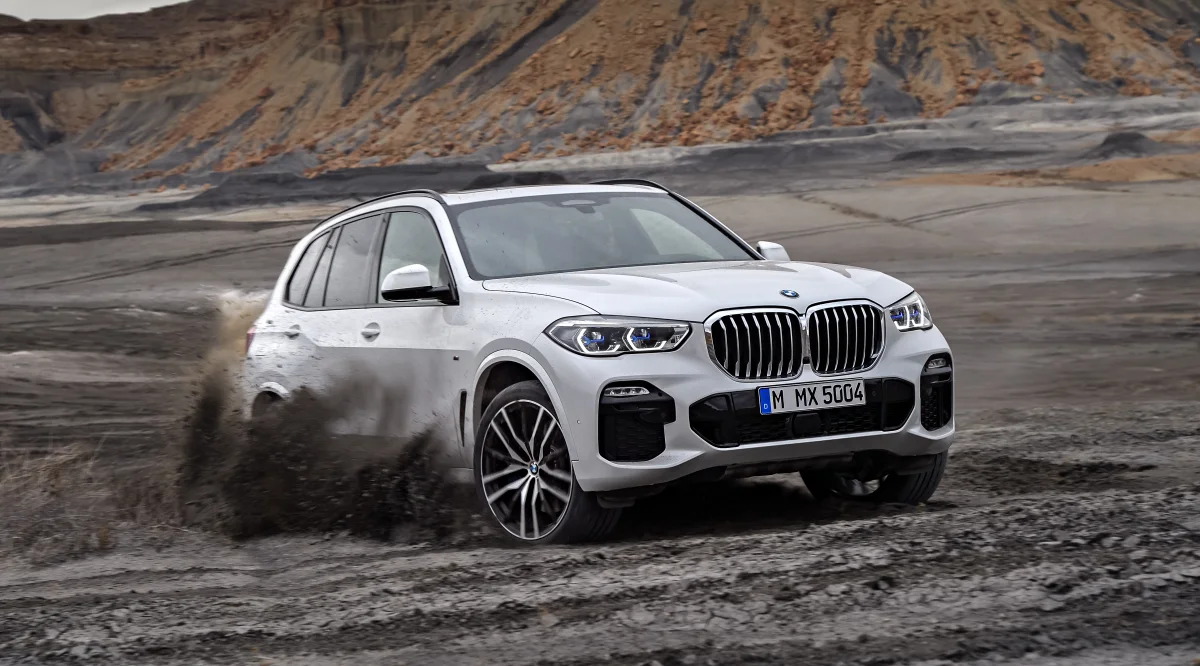
- The front/rear/surround speakers all go down to 80hz. This is roughly equivalent to letting the built-in high-pass filter do its job. There is a distinction to be made here between *acoustic* vs. *electrical* crossovers: The built-in crossover is the electric crossover. When you tune a specific channel with a mic, ignore the electrical crossover and look at what the speaker can actually do in RTA. For us (G05 w/ HK S668A), it will drop off well above 80hz. I don't recall exactly the best crossover for HK underseats and door speakers, but I *think* it's around 150hz. That said, the ci5s do in fact go higher (with a mixed front door and underseat speaker mix to virtual underseat like I have in the tune file)
- The tune file assumes a trunk sub. If you do have a trunk sub, retune the phase accordingly. If you don't have a trunk sub, ignore the sub channel and set your underseats to go all the way down to 20hz (or bypass). With no trunk sub, you'll want your underseats going as low as they can go. Also I want to echo the order of upgrades originally laid out: DSP first, then trunk, then door speakers, then underseats. That is also IMO the most impactful order of upgrades.
- The underseat gain (in DCM) is at its lowest level. I honestly can't remember whether this was the correct setting for the HK underseats or whether I did this after installing the ci5s. Just something to keep in mind. That said, I'm pretty sure this setup is going to max out the HK underseats with minimal distortion at higher volumes, so I don't think it's a good idea to crank the gain any further. If you do increase gain, make sure to do it properly (with volume maxed and speakers muted). It's really easy to push the HKs to distortion.
- The EQ per channel are all reset. You'll need a decent mic to tune. I used to use a crappy mic (Dayton Audio iMM-6), but it wasn't great at picking up sounds without cranking both the mic and the volume to the max. I have had an easier time tuning with the UMIK-1. I got the Dayton after watching Raw-Cat's review of a bunch of mics and claiming they are all equivalent, but I did not experience that to be the case in practice. That said, I find about 80% of what that dude says to be 100% accurate (60% of the time, it works every time). He is 100% out to help us DIYers.
specifically for you, I don't have the MEC. I believe that's for center channel. My tune file assumes no MEC (the center channel is mixed left/right with "true center" or whatever they call it enabled in DCM). I have found the center channel is nice to mess around with *after* you have figured out everything else, but perhaps this may be different with the MEC.
Anyway, hope this is helpful. If it's not working out for you then just do your own thing and continue asking questions. It's a fun and rewarding process.