
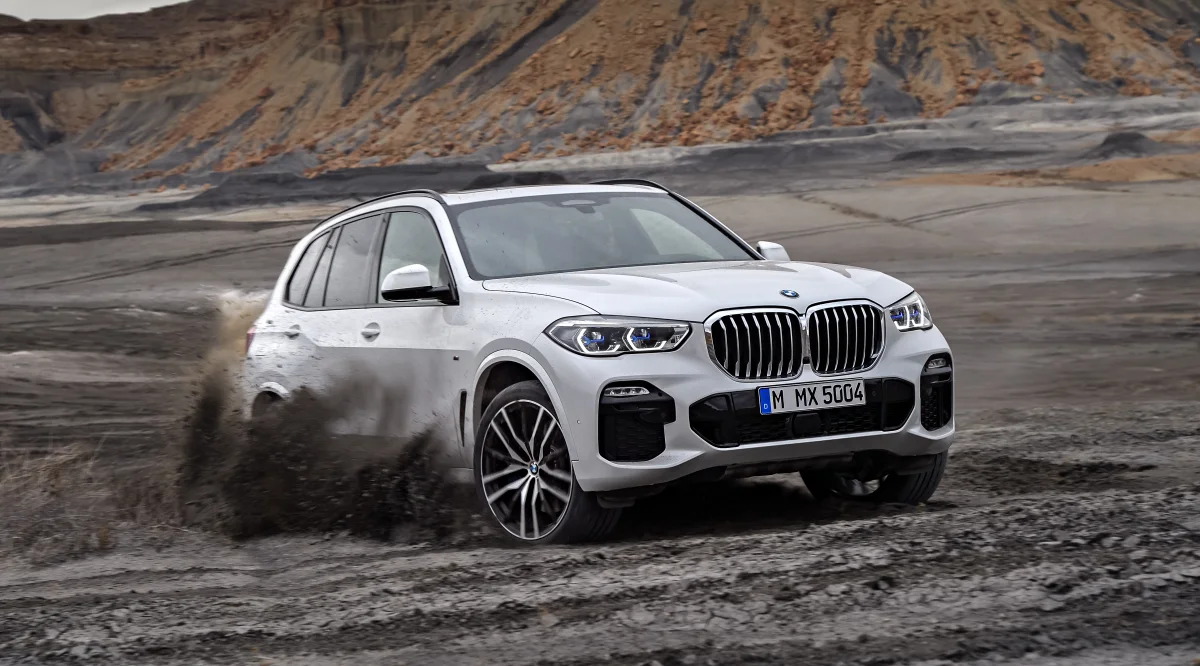
Appreciate the passion, but this rebuttal reads like someone trying to invalidate a real-world towing insight because the tire sizes weren’t held in a laboratory vacuum. Andy Thomson made a clear recommendation based on lived experience and the actual behavior of mid-size SUVs in towing scenarios. He wasn’t writing a whitepaper - he was offering practical advice to improve real-world towing dynamics. And in doing so, he pointed out that lower-profile tires improved performance and handling - the very thing you have been side-eyeing all thread.
Sure, his example involved a size drop and came with the usual trade-offs like speedo calibration - and he stated that plainly. But to then nitpick that it wasn’t a perfect A/B test in a wind tunnel? That’s not a rebuttal, that’s just dodging the bigger point.
Also, let's not pretend Andy is some internet forum hobbyist. He’s got 25+ years of publishing in RV Lifestyle Magazine, runs Can-Am RV Centre, and was trusted by Porsche to set up a Cayenne to tow a 30-foot Airstream. Porsche didn’t seem worried about the tire size delta, they handed him the keys.
Your attempt to disqualify his point by reshaping the conversation back into a tire physics seminar doesn’t change the lived experience of people who have actually towed on both setups. You are defending theoretical max load deltas and rotational inertia like we are towing spreadsheets. Meanwhile, the people who have spent real miles on real roads with real trailers are telling you the X5 rides more confidently on lower-profile, stiffer-sidewall tires.
That’s the part you keep missing. This isn’t about who can Google PSI charts fastest. It’s about what happens at 65 mph when a crosswind hits and the trailer doesn’t flinch, because that is towing stability.
Let’s stop trying to over-theorize what those of us with seat time already know.
Polo08816 wroteAndy Thomson isn't really saying anything different than what I've been saying, but there's one part that he's actually wrong about that you've cut off:
1. It's an apple to orange comparison. He's not holding overall diameter constant. He's actually comparing two tires of very different sizes.
It's no different than me saying, "Hey, I'll take off my non-factory heavy 35" overall diameter offroad all terrain tires and put my original standard factory size 275/60/20 (33" overall diameter) on my large suv/pickup truck, I'll restore my on road performance, handling, and ride comfort.
Just for comparison:
235/70R16
106H
Max Load: 2,094 lbs
Max PSI: 51psi
Tire Weight: 33lbs
Overall Diameter: 29"
225/60R16
98H
Max Load: 1,653 lbs
Max PSI: 51psi
Tire Weight: 25lbs
Overall Diameter: 26.9"
The smaller tire weighs 8lbs less per tire which will feel like you've had a weight reduction of 320lbs due to lower un-sprung weight. The 26.9" diameter tire will also feel faster when accelerating than the 29" diameter tire because the smaller tire will change your overall drive ratio.
Why didn't Andy Thomson recommend a 225/60/18 (28.9" overall diameter) tire over the 235/70/16 (29.0" overall diameter)? Or better yet, a (225-235)/55/19 tire which is about 28.9" in diameter? Had he held overall diameter constant and simply changed the wheel diameter and tire sidewall profile, it would have been the direct comparison you're talking about, right?
2. Andy Thomson is not exactly correct about "smaller" tires not being quite as good in the snow. "Narrower" tires tend to perform better on snow covered roads.
3. I didn't realize one finger towing was the measure of "stability". Is it possible that your weight distribution hitch isn't transferring enough load onto your front axle and thus you're having the "light steering" sensation? You might want to visit a CAT sale at some point to confirm your rig and hitch are set up properly.


